Hyperrealist Leng Jun
One of the most realistic oil painters in the world

Happy Sunday! It is the best day of the week to me. I have been reading and researching about an artist that specializes in hyperrealistic oil painting this week and I’ve been seeing this artist come up on a bunch of articles so you might have seen these articles on social media as well. Hyperrealism is not only so technically hard to pull off, but sometimes it can be so surreal that it messes with the mind entirely (mine at least). It is truly an underrated genre and one of my favourites that I almost never bring up or write about, but hyperrealist Leng Jun’s work has been deemed some of the most realistic oil paintings in the world that I wanted everybody who had never heard of the artist to get an opportunity to see their work.
Leng Jun was born in Sichuan, China in 1963 and currently still lives and works in Beijing. He also studied Fine Arts at Hankou Branch of Wuhan Normal College. Having grown up in during the Chinese economic reform, the new expansion to the West side of the world helped Jun, and many Asian artists during this time period, to extend their art style and incorporate other styles in order to augment their own work. We often forget about how subtle shifts in economy or government or social makeup of nations can affect the creativity of the people within it and what they do with their own power. Especially what goes on during adolescence and the world around us, this can have a tremendous affect on the artist. In regards to this, Jun has stated:
“At the time, information coming from the West greatly contributed to the enlightenment of our people. It also laid a very solid foundation for my later creations.”
Below is arguably one of Jun’s most famous art pieces which has been deemed one of the most realistic oil paintings ever by many articles. The detail also presented below shows the smallest fragments of hair on the sleeve of the sweater. The more you look, the harder it is to distinguish picture from real life. I will save you my thoughts on it and let you garner your own thoughts and feelings while looking at the whole piece and then the details.
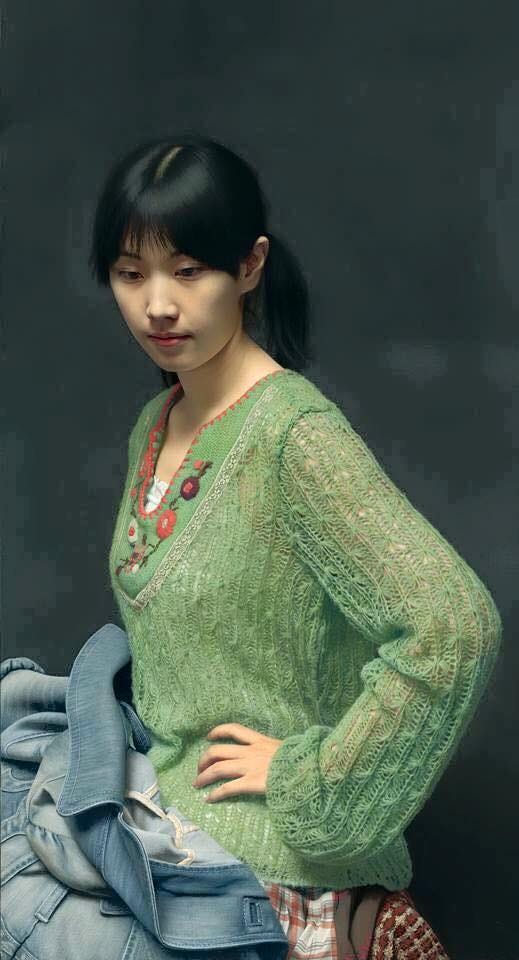
Leng Jun, Portrait of the Face - Xiaojiang, 2013, oil on canvas, 47.2 in x 23.6 in
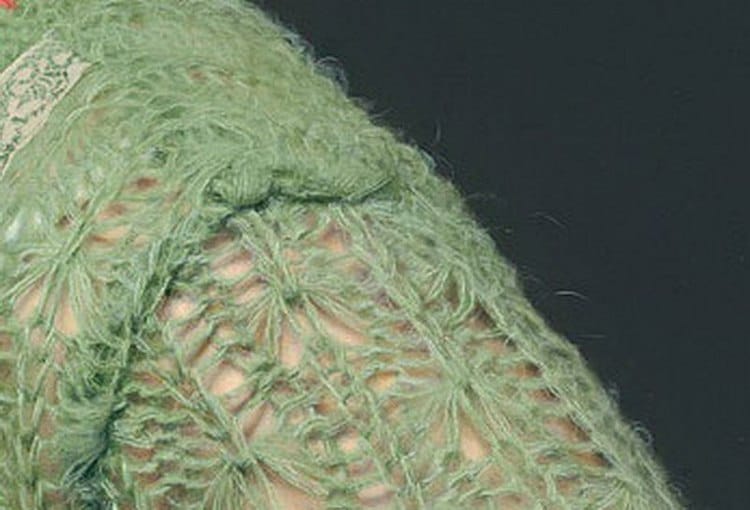
Leng Jun, Portrait of the Face - Xiaojiang, detail
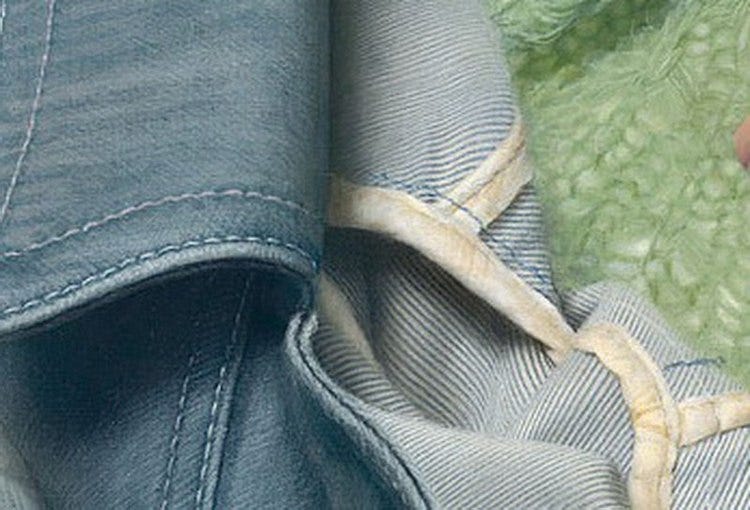
Leng Jun, Portrait of the Face - Xiaojiang, detail
Usually, shifts in art or personal experiences are thought to spark a unique shift in one’s art, but the list expands far more out there than that. I think really anything can change a person’s perspective enough to also change their art. Hyperrealism was just beginning to emerge in the world around the 1970s when Jun was experiencing adolescence. About this period, Jun has said:
“For people like me who were born around the 1960s, we were teenagers at the time when we formed our worldview. That was a great opportunity. Looking back, reform and opening-up really saved the soul of our generation,”
Originally a coined term in Europe, hyperrealism eventually made it way all around the globe where artists had their fair share to try out the successor to photorealism (which emerged around the 60s). The work below pays homage to Leonardo da Vinci’s famous Mona Lisa with a modern twist; still so rich in texture you know exactly what it would feel like to touch her hair through the painting. This work went viral in the early 2000s similarly to the Jun’s Portrait of the Face - Xiaojiang presented above. I think senses are incredibly important when dealing with genres like photorealism and hyperrealism and what separates this genre from others.
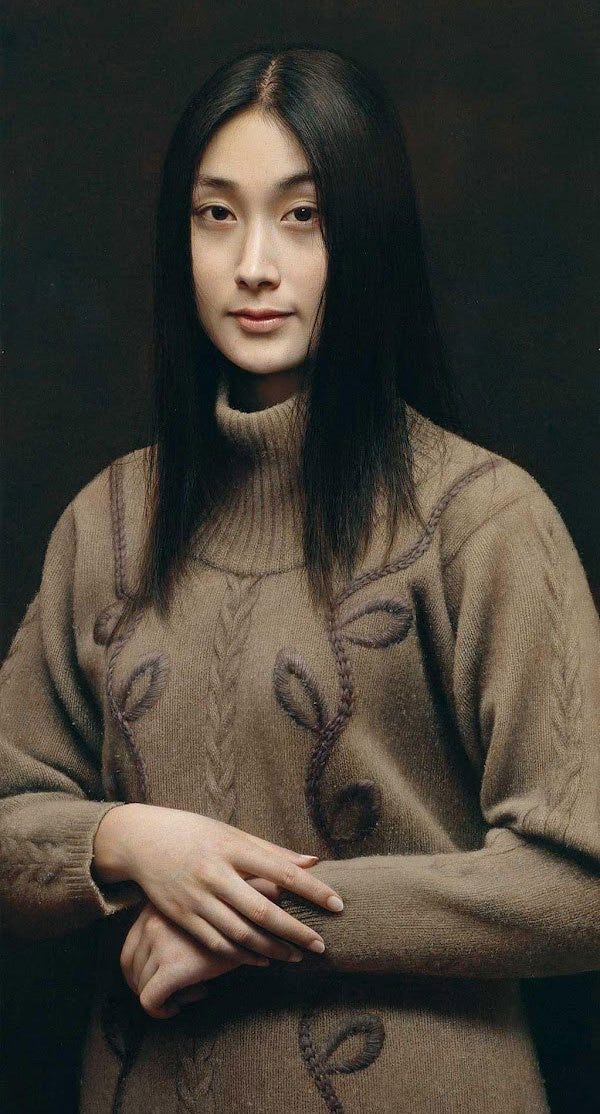
Leng Jun, Mona Lisa – The Design of Smile, 2004, oil on canvas, 31.5 in x 23.6 in
I always want to talk about composition when I look or talk about work, but with hyperrealism, not only is that incredibly hard to comment on, but everybody is going to take away something different or feel a certain way about the way an artist went about the features of the subject. As mentioned previously, texture for me plays a huge role in distinguishing this from other genres. That being said, other genres also utilize texture, some more than others, and there are obviously other defining factors for each art style. In his work entitled Xiao Tang, you see the artists’ understanding of texture and how he employs this: the pale oily skin against the dark silky strands of hair provides so much contrast and spark the senses. This is almost better than real life for me, the simple replication of our reality.
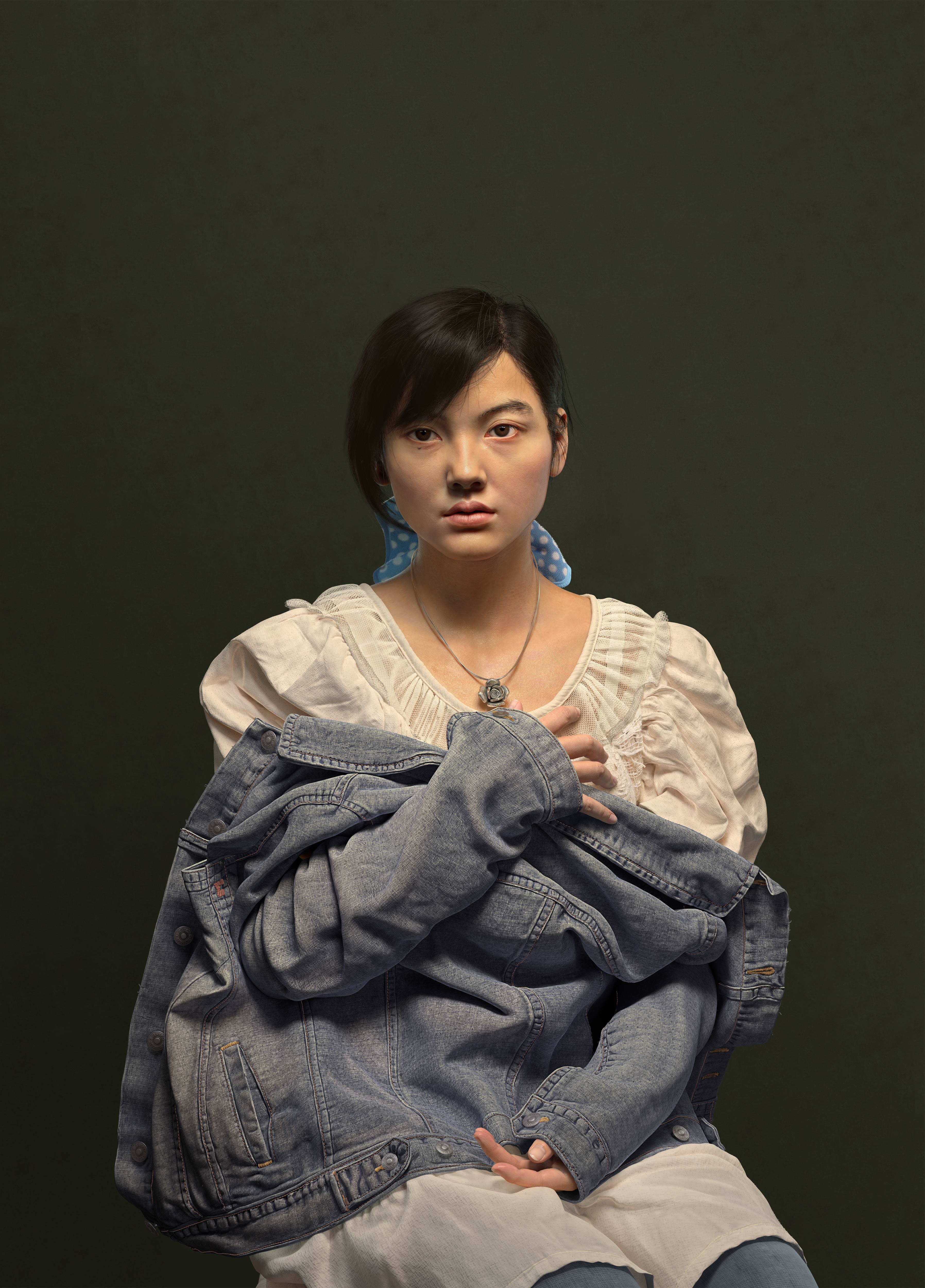
Leng Jun, Xiao Tang, 2008, oil on canvas
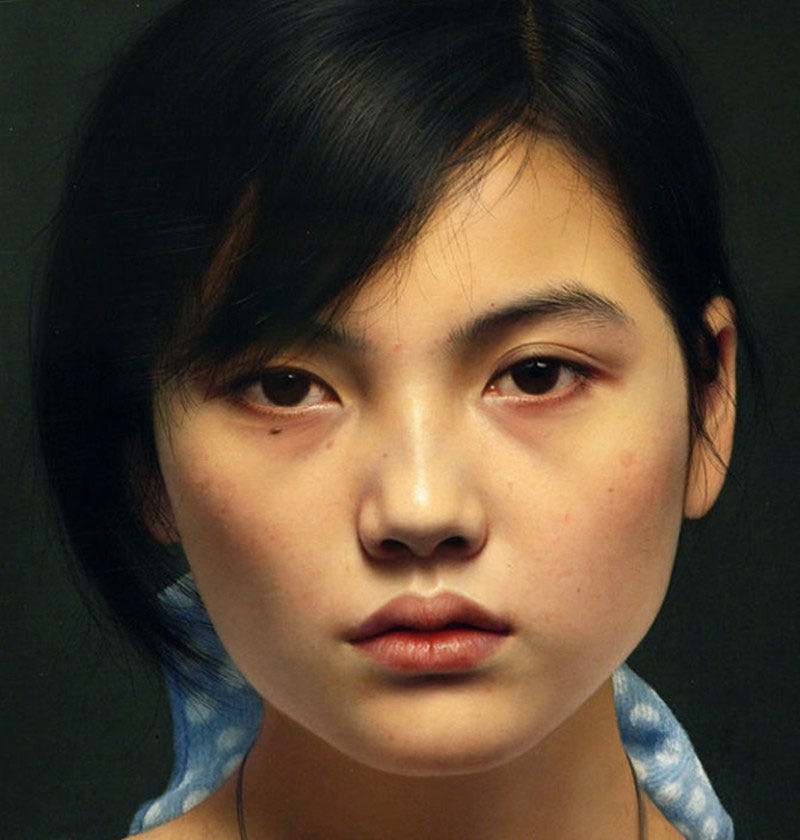
Leng Jun, Xiao Tang, detail
Thanks for diving in the world of hyperrealism this week; as mentioned before, I find this to be a highly underrated and overlooked genre because of its ability to replicate the real world so well, so I want to continue this segment and highlight other artists in the weeks to come. It is a genre I could (possibly) never attempt but something I could dream of. I hope the first week of 2023 was savoured and everybody is enjoying themselves!
Take care, Taya